
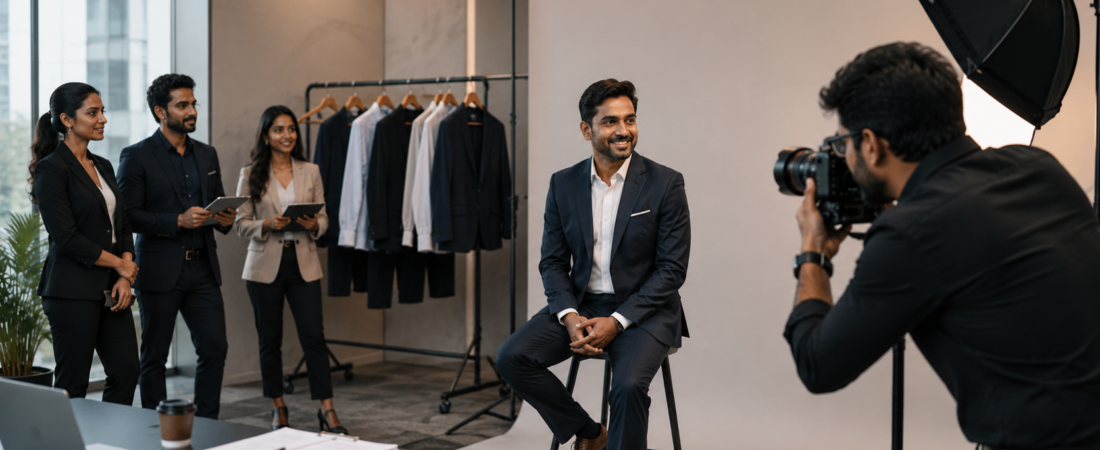
A corporate photoshoot is more than simply standing in front of a camera and smiling. The right photographs can shape how clients, candidates, partners, and potential customers see your business. Professional corporate photography helps communicate credibility, personality, confidence, and attention to detail across your website, LinkedIn profiles, company presentations, press materials, social media, and marketing campaigns.
However, getting great corporate photos does not happen by accident. Good preparation before the shoot can make a significant difference in how comfortable people feel, how efficiently the session runs, and how useful the final images are.
Whether you are photographing an entire team, updating executive headshots, creating employee portraits, or producing images for a company website, these practical corporate photo shoot tips will help you get better results from start to finish.
1. Decide What You Want to Achieve Before the Photoshoot
The first step is to define the purpose of the photography.
Ask yourself: Where will these photographs be used?
You may need images for:
- Company websites
- LinkedIn profiles
- Employee directories
- Annual reports
- Press releases
- Social media
- Recruitment campaigns
- Marketing brochures
- Presentations
- Corporate profiles
- Advertising campaigns
The intended use should influence the type of photographs you create.
For example, a website team page may require consistent headshots with a clean background. A recruitment campaign might benefit from relaxed workplace photographs showing employees interacting naturally. Executive portraits may need a more polished and authoritative look.
Creating a simple shot list before the session helps ensure that important photographs are not forgotten.
Your list might include individual headshots, group portraits, leadership photographs, workplace images, team interactions, office details, and horizontal photographs with space for website text.
A clear objective also helps the photographer understand the visual direction of the shoot.
2. Plan Your Wardrobe Carefully
Clothing can have a surprisingly large impact on corporate photographs.
The goal is not necessarily to make everyone dress identically. Instead, clothing should reflect your company’s culture while remaining professional and appropriate for the intended audience.
For a traditional corporate environment, suits, shirts, blazers, dresses, and smart business attire may work well. A creative agency or technology company might choose a more relaxed business-casual style.
Avoid clothing with large logos, distracting graphics, very small patterns, or extremely bright colors unless they are part of the company’s visual identity.
It is also useful to prepare outfits in advance rather than deciding what to wear immediately before the shoot.
Ask employees to bring clean, pressed clothing and, where possible, an alternative option. Small wardrobe changes can provide useful variety during the session.
For team photographs, consider coordinating colors without making everyone look identical. A balanced palette often creates a more polished result.
Most importantly, employees should feel comfortable in what they are wearing. If someone constantly adjusts their clothing during the session, that discomfort can become visible in the photographs.
3. Prepare Employees Before They Arrive
One of the easiest ways to improve corporate photography is to tell employees exactly what to expect.
People who are unfamiliar with professional photography often feel nervous before stepping in front of the camera. They may worry about how they look, how they should pose, or whether they will know what to do.
A short preparation email can remove much of that uncertainty.
Explain:
- The date and approximate time of their session
- What they should wear
- Whether they need to bring anything
- How long their session is expected to take
- Whether professional makeup or grooming is available
- Where they should meet the photographer
- Whether they will be photographed individually or as part of a group
Let them know that they do not need to know how to pose. A professional photographer can provide direction throughout the session.
This simple communication can make employees feel more relaxed before the camera even comes out.
4. Choose the Right Location
The location can influence the entire visual style of a corporate photo shoot.
A studio environment provides excellent control over lighting, backgrounds, and consistency. This can be particularly useful when photographing a large team or creating standardized employee headshots.
An office environment, on the other hand, can provide context and personality.
A photograph of an employee in a meeting room, at a workstation, or in a collaborative space can communicate more about the company’s working environment than a traditional headshot.
Before the shoot, walk through the location and identify suitable areas.
Look for:
- Clean and uncluttered backgrounds
- Attractive architectural features
- Areas with good natural light
- Meeting rooms
- Reception areas
- Collaborative spaces
- Outdoor areas near the workplace
Remove unnecessary objects from the background before photography begins. Items such as loose cables, overflowing bins, random paperwork, or personal belongings can distract from an otherwise strong photograph.
If you are working with a specialized corporate photography studio, discuss the location and visual requirements in advance so the photographer can plan the appropriate equipment and lighting.
5. Create a Detailed Shot List
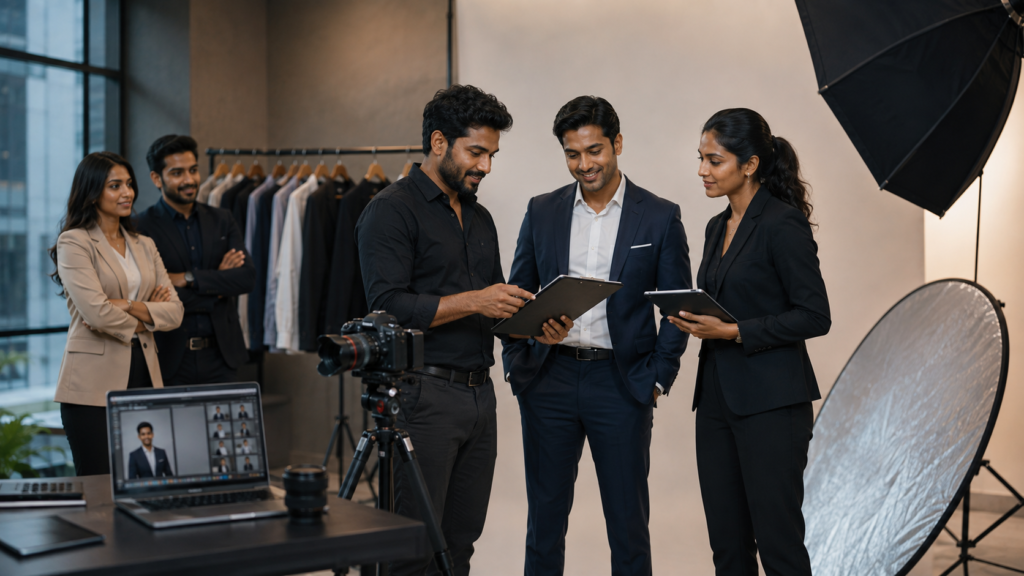
A shot list keeps the photo shoot organized and prevents important images from being overlooked.
Start with essential photographs and then add optional images.
For example, a corporate photo shoot could include:
Individual portraits
- CEO or founder portrait
- Senior leadership portraits
- Employee headshots
- Department-specific portraits
Group photographs
- Full team
- Management team
- Individual departments
- Smaller working groups
Workplace photographs
- Employees collaborating
- Team meetings
- Client discussions
- Employees working at desks
- Informal conversations
- Presentations
- Office environment
Marketing images
- Wide office photographs
- Employees using technology
- Detail shots
- Images with negative space for website copy
- Horizontal banner photographs
The shot list should also account for different image orientations.
If your website uses wide hero banners, tell the photographer. A portrait-oriented photograph may look excellent on LinkedIn but be unsuitable for a website header.
Planning these requirements in advance can save significant time later.
6. Keep the Schedule Organized
Corporate photoshoots can involve many people, so scheduling is essential.
If 20 employees each need individual portraits, allowing everyone to arrive whenever they are available can quickly create delays.
Instead, create time slots.
For example:
9:00–9:15: Setup
9:15–9:45: Leadership portraits
9:45–11:00: Individual employee portraits
11:00–11:30: Department photographs
11:30–12:00: Team photographs
12:00–12:30: Workplace and marketing photographs
The exact schedule will depend on the size and complexity of the project.
Nominate one person from the company to coordinate employees during the shoot. This person can make sure the next group is ready, answer logistical questions, and help keep the session moving.
Good scheduling reduces waiting time and helps employees return to their normal work more quickly.
7. Encourage Natural Expressions and Body Language
One of the biggest challenges in corporate photography is making people look natural.
A forced smile or uncomfortable pose can make an otherwise technically perfect photograph feel artificial.
Professional photographers typically solve this through direction and conversation rather than simply telling someone to “smile.”
Small adjustments can make a significant difference.
Instead of asking someone to pose rigidly, the photographer might ask them to turn slightly, relax their shoulders, shift their weight, or think about a familiar conversation.
For workplace photographs, encourage employees to interact naturally rather than constantly looking at the camera.
The best corporate images often show genuine moments of communication, concentration, collaboration, or confidence.
That does not mean every photograph needs to be candid. A professional portrait can still be carefully posed while looking relaxed and authentic.
8. Pay Attention to Lighting
Lighting is one of the most important technical elements of professional photography.
Poor lighting can create harsh shadows, uneven skin tones, distracting highlights, or an inconsistent appearance between employees.
For consistent corporate headshots, controlled lighting is often the best solution. Studio lighting allows the photographer to maintain a similar appearance throughout the session.
Natural light can also work beautifully for environmental corporate photography, especially in modern offices with large windows.
However, relying entirely on available light can create challenges if the weather changes or the light shifts during a long session.
Discuss lighting requirements with your photographer before the shoot.
The photographer may recommend artificial lighting, reflectors, diffusers, or a combination of natural and artificial light depending on the location and desired style.
Good lighting should support the subject rather than become the main feature of the photograph.
9. Take More Than Just Headshots
Professional headshots are important, but they should not be the only photographs you create.
Businesses increasingly need flexible visual content that can be used across multiple platforms.
Consider creating a mixture of:
- Head-and-shoulder portraits
- Half-body portraits
- Full-body portraits
- Team photographs
- Environmental portraits
- Candid workplace images
- Detail photographs
- Wide office photographs
Also consider leaving empty space around some subjects.
This is known as negative space, and it can be extremely useful for marketing.
For example, a website designer may need a photograph on the right side of a banner and text on the left. If every photograph tightly crops the subject, the marketing team may have fewer options.
Think beyond the immediate requirement and create a library of photographs that can serve the business for months or even years.
10. Work With a Specialized Corporate Photography Studio
Perhaps the most important corporate photo shoot tip is to choose a photographer or studio that understands business photography.
Corporate photography requires more than knowing how to operate a camera.
A professional corporate photographer needs to understand how to photograph different personalities, organize groups, work efficiently within business schedules, manage lighting, and produce photographs that fit a company’s brand.
A specialized studio can also help with planning, location selection, wardrobe guidance, shot lists, lighting, posing, and post-production.
This is particularly valuable when photographing executives or large teams. The session needs to be efficient without making people feel rushed.
For companies such as Corporate Snap, the goal should be to make the entire experience straightforward, from booking and briefing through to the final photographs.
Working with a specialist also helps create consistency. If every employee’s portrait has a similar composition, lighting style, and visual quality, the company’s website and marketing materials will look significantly more professional.
What to Do on the Day of the Photoshoot
Once the preparation is complete, keep the day as simple as possible.
Make sure the photography area is ready before employees begin arriving. Check that backgrounds are clean, equipment is set up, and the shot list is accessible.
Have the employee schedule available to the person coordinating the shoot.
Encourage employees to arrive a few minutes early rather than exactly at their scheduled time. This provides an opportunity to make small wardrobe or grooming adjustments without delaying the session.
The photographer should also review the first few images early in the shoot. This allows lighting, positioning, backgrounds, and camera settings to be adjusted before photographing the entire team.
Most importantly, maintain a positive atmosphere.
People tend to look better when they feel comfortable.
Common Corporate Photoshoot Mistakes to Avoid
Even well-planned photography projects can run into problems. Avoiding a few common mistakes can make the process much smoother.
Skipping the shot list: Without a plan, important photographs can easily be forgotten.
Leaving wardrobe decisions until the last minute: Employees may arrive wearing clothing that does not match the intended visual style.
Using inconsistent lighting: Different lighting setups can make team photographs look disconnected.
Ignoring the background: A strong portrait can be weakened by clutter behind the subject.
Trying to photograph everyone at once: Large groups require organization and direction.
Only taking tightly cropped headshots: You may later discover that you need wider images for marketing materials.
Not allowing enough time: Rushing employees often results in stiff expressions and unnecessary stress.
Choosing a photographer without corporate experience: Business photography has specific logistical and branding requirements that general photography may not address.
After the Photoshoot: Make the Images Work for Your Business
The work does not end when the camera is packed away.
After the photo shoot, organize the final images carefully. Use descriptive file names and create folders for different departments, executives, team photographs, headshots, and marketing images.
Consider where each image will be used.
Your website may need landscape images for banners and square portraits for team profiles. LinkedIn may require a different crop. Presentations may benefit from wider workplace photographs.
A professional photographer should also provide guidance regarding image selection and appropriate formats.
Avoid applying excessive filters or edits that make people look unnatural. Corporate photography should feel polished while still representing real people and the company’s culture.
Frequently Asked Questions About Corporate Photoshoots
How should I prepare for a corporate photoshoot?
Start by deciding how you will use the photographs, then prepare a shot list, coordinate employee schedules, plan suitable outfits, and choose an appropriate location. Sharing clear instructions with employees before the shoot can also help everyone feel more comfortable and prepared.
What should I wear for a corporate photoshoot?
Choose professional clothing that reflects your company’s brand and workplace culture. Solid colors and classic business or business-casual outfits generally work well. Avoid distracting patterns, large logos, and clothing that makes you uncomfortable. Bringing an additional outfit can also provide more variety.
How long does a corporate photoshoot take?
The time depends on the number of people, locations, and types of photographs required. A simple individual headshot session can be relatively quick, while a full corporate photoshoot involving executives, teams, and workplace photography may require several hours.
Should corporate headshots be taken in a studio or at the office?
Both options can work well. A studio provides consistent lighting and clean backgrounds, while an office environment adds context and personality. The best choice depends on your company’s brand, the intended use of the photographs, and the visual style you want to achieve.
How can employees look more natural in corporate photos?
Professional direction makes a major difference. Instead of relying on rigid poses, photographers can guide posture, facial expressions, and positioning while encouraging natural interaction. Comfortable clothing, clear communication, and a relaxed atmosphere can also help employees feel more confident.
How many photos should we take during a corporate photoshoot?
There is no fixed number. It is better to plan photographs around your actual business needs. Include essential headshots and team photographs, then consider workplace, leadership, marketing, and wide-format images that can be reused across your website, social media, recruitment campaigns, and other marketing materials.
What makes a good corporate headshot?
A strong corporate headshot combines flattering lighting, a clean background, professional composition, natural expression, and confident body language. Most importantly, the photograph should look authentic and align with the company’s overall visual identity.
Why should I hire a professional corporate photographer?
A professional corporate photographer understands lighting, posing, composition, brand consistency, and the logistics of photographing employees and teams. A specialist can also help with planning, shot lists, scheduling, and creating images that work across different business and marketing platforms.
Final Thoughts
A successful corporate photo shoot starts long before the first photograph is taken.
Clear goals, thoughtful wardrobe planning, employee communication, a practical shot list, an organized schedule, suitable lighting, and the right location all contribute to better results.
Most importantly, corporate photography should represent the people behind the business.
When employees look confident, approachable, and authentic, the photographs can help potential clients and future employees develop a stronger connection with the company.
Whether you need executive portraits, team headshots, workplace photography, or a complete corporate image library, investing time in preparation will make the entire experience more efficient and the final photographs more valuable.
And if you want the process to be simple from planning to delivery, working with a specialized corporate photography studio such as Corporate Snap can help you create professional images that are ready for your website, LinkedIn, marketing campaigns, recruitment materials, and future business needs.